Rashi commentary stands as the single most essential guide to understanding both Chumash and Gemara in our mesorah (tradition). For nearly a thousand years, the peirush (commentary) of Rabbi Shlomo Yitzchaki (Rashi) has shaped how every Yid, from a young child opening a Chumash for the first time to a seasoned talmid chochom reviewing a sugya, encounters the words of the Torah. Without Rashi, the Talmud itself would remain, as the Rivash described it, a “sealed book.”
When we study Rashi, we are not merely reading one man’s interpretation. We are receiving the distilled wisdom of generations of mesorah, including the teachings of Tannaim like Rabbi Meir Baal Haness, whose halachic positions and Torah insights Rashi transmits and clarifies throughout his work. Rabbi Meir Baal Haness Charities, founded in 1799, continues this chain of transmission, ensuring that the Torah learning and chesed (kindness) Rabbi Meir championed endure in Eretz Yisroel today. Explore how Rabbi Meir Baal Haness Charities supports Torah scholars and needy families in the Holy Land.
In the sections that follow, we will trace how Rashi’s peirush works on Chumash and Gemara, what the Gedolim say about his indispensable role, and how his commentary preserves the teachings of Rabbi Meir across the centuries.
Who Was Rashi and Why His Peirush Changed Everything
Rabbi Shlomo Yitzchaki, known universally by the acronym Rashi, was born in Troyes, France, in approximately 4800 (1040 CE) and passed away in 4865 (1105 CE). He authored commentaries on virtually the entire Chumash and Talmud Bavli, earning the title “Father of Commentators” among later generations of meforshim (Torah commentators). His achievement was extraordinary not because he introduced novel interpretations from his own reasoning alone, but because he synthesized the explanations of Chazal (our Sages of blessed memory), drawing from Midrash, Gemara, and earlier commentators, into a clear, accessible format that any serious learner could follow.
Before Rashi, studying Gemara required either a gifted rebbe at your side or years of immersion to decipher the Talmud’s terse Aramaic. Rashi changed that reality permanently. The Rivash (Rabbi Yitzchak bar Sheshes, 1326–1408) is reported to have said that without Rashi’s peirush, the Talmud would be like a sealed book. That is not an exaggeration, it is an acknowledgment that Rashi’s commentary transformed Torah study from something accessible only to a scholarly elite into the inheritance of every member of Klal Yisroel.
From Troyes to Every Beis Midrash in the World
Rashi studied in the great yeshivos of Ashkenaz, particularly in Worms and Mainz, under talmidim of Rabbeinu Gershom Me’or HaGolah. He then returned to Troyes, where he served as the rav of the community and composed his monumental works. Within a generation of his passing, Rashi’s commentary on Chumash became the standard companion to the text, fulfilling the halachic requirement of reviewing each weekly parshah “shnayim mikra v’echad Targum”, with some poskim holding that studying Rashi’s peirush satisfies the requirement of Targum. His commentary on Gemara became equally indispensable, printed alongside the text on every daf in the standard Vilna Shas layout we use today.
Hundreds of super-commentaries have been written on Rashi’s Chumash commentary alone, a testament to the depth concealed within his seemingly simple words. Scholars across the centuries, from the Ramban to the Mizrachi to the Gur Aryeh of the Maharal, have devoted entire seforim (sacred texts) to understanding Rashi’s precise methodology and the questions that motivated each comment.
How Rashi Commentary Works on Chumash
One of the most important principles for understanding Rashi commentary on Chumash is a statement Rashi himself makes in Bereishis 3:8. He writes: “ואני לא באתי אלא לפשוטו של מקרא”, “I have come only for the pshat (plain meaning) of the verse.” This declaration establishes Rashi’s primary commitment: to clarify the straightforward meaning of the text. Yet anyone who has studied Rashi knows that he frequently cites Midrashim and Aggadic teachings. How do we reconcile these two approaches?
The answer lies in Rashi’s method. He selects Midrashic material only when it resolves a textual difficulty, when the pshat alone leaves a question unanswered, a word unexplained, or a grammatical irregularity unaddressed. Rashi does not bring Midrash for its own sake. He brings it when it harmonizes with the verse’s context and fills a gap that pshat cannot.
Pshat, Midrash, and Dikduk Woven Together
Rashi’s peirush on Chumash weaves together three threads: pshat (plain meaning), Midrash (interpretive teaching from Chazal), and dikduk (grammar). Consider how Rashi approaches a verse where the Torah uses an unusual word form or an unexpected phrase. He will often begin by noting the grammatical issue, perhaps a word appears in an unusual conjugation, or a seemingly redundant phrase appears. He then explains the pshat meaning that emerges from this observation, and where needed, brings a Midrashic teaching that aligns with the textual evidence.
This method is what makes Rashi commentary so endlessly rich. A beginning student reads Rashi and understands the verse. A more advanced learner reads the same Rashi and asks, “What was bothering Rashi? Why did he feel the need to comment here at all?” This question, popularized by Rabbi Eliyahu Mizrachi and later by many teachers of Chumash, opens an entire world of depth.
Later meforshim understand that Rashi generally avoids Midrashim that contradict the pshat of the verse. This is seen as a critical principle in his methodology. He does not include every available Midrash. He curates, selects, and presents only those teachings that sit comfortably with the text’s plain reading. The result is a commentary that feels deceptively simple on the surface but contains layers upon layers of precision.
When we study Rabbi Meir historical evidence preserved in Talmudic literature, we find that Rashi’s method of careful source selection applies equally to how he handles the teachings of Tannaim like Rabbi Meir Baal Haness, always choosing the version that best clarifies the text at hand.
Rashi on Gemara: The Key That Unlocks the Talmud
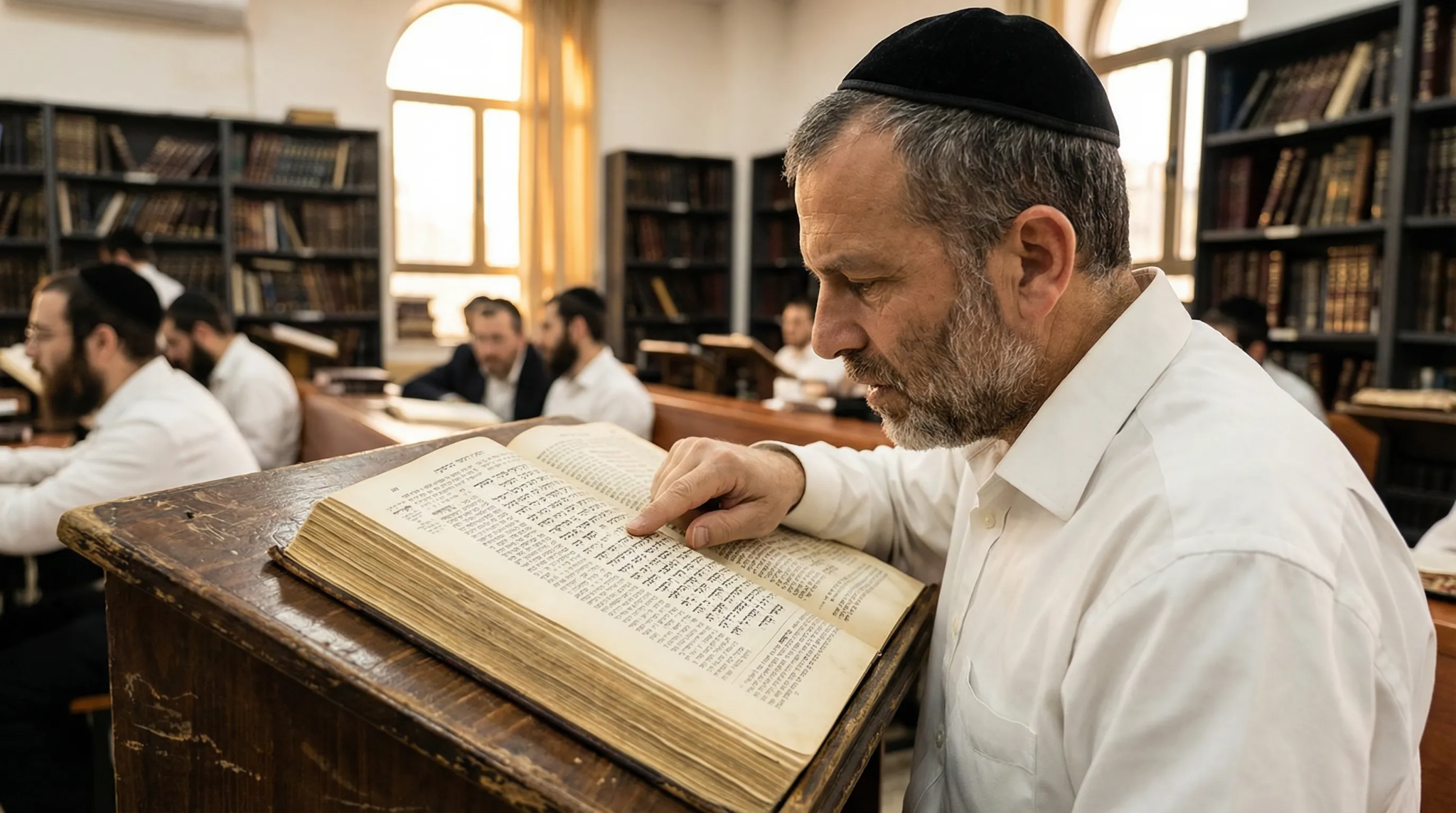
If Rashi’s Chumash commentary is the lens through which we read the Torah, his Gemara commentary is the key that opens the door to the entire Talmud. The Gemara’s style is famously compressed, arguments are abbreviated, speakers shift without introduction, and Aramaic terminology can be cryptic even to those fluent in Hebrew. Rashi turns this dense, elliptical text into what scholars have described as a “coherent flowing text.”
On every daf of Gemara, Rashi identifies the subject of the discussion, explains unfamiliar Aramaic terms, clarifies the logical flow of arguments, and tells us which Tanna or Amora is speaking when the text does not make it explicit. He does all this with remarkable economy, often in just a few words that illuminate an entire passage.
Consider the many sugyos (Talmudic discussions) involving Rabbi Meir’s halachic positions. Throughout the Talmud, we find statements like “סתם מתניתין רבי מאיר”, “An anonymous Mishnah reflects the view of Rabbi Meir” (Sanhedrin 86a). Rashi’s commentary on these passages helps us understand precisely how Rabbi Meir’s position functions within the broader halachic debate, when the halacha follows his view, and when it does not.
For instance, in Eruvin 13b, the Gemara records: “שלא יכלו חבריו לעמוד על סוף דעתו”, “His colleagues could not reach the depth of his understanding.” Rashi explains that Rabbi Meir’s reasoning was so multifaceted that he could argue for the purity of something impure and support his argument convincingly. Without Rashi’s clarification, a learner might misunderstand this passage as mere hyperbole rather than a description of Rabbi Meir’s extraordinary analytical method.
Rashi’s Approach to Aggadah and Halacha
Rashi’s treatment of Aggadic (narrative) passages in the Gemara follows a parallel principle to his Chumash method. He selects explanations that harmonize with the flow of the sugya and provide practical understanding. When the Gemara discusses Rabbi Meir’s halachic reasoning and methods of interpretation across various sugyos, Rashi carefully explains the technical rules governing this hermeneutical tool, helping the learner follow the logic step by step.
For halachic passages, Rashi’s commentary often serves as the baseline reading that all subsequent Rishonim build upon or respond to. The Tosafos, printed on the opposite side of the daf from Rashi, frequently begin their comments with the words “Rashi peirush”, “Rashi explained”, before offering an alternative approach. This dynamic between Rashi and Tosafos has shaped the method of Talmud study in every yeshiva for centuries.
Centuries of careful emendation and analysis of Rashi’s Gemara commentary testify to how seriously our mesorah takes every word he wrote. Each phrase was weighed and chosen with precision, and generations of talmidei chachamim (Torah scholars) have found that revisiting Rashi’s commentary reveals new understanding at every stage of learning.
What the Gedolim Say About Learning Rashi
The reverence that Gedolei Yisroel have expressed for Rashi commentary across the centuries is remarkable in its consistency. The Ramban (Nachmanides, 1194–1270), though he frequently disagrees with Rashi’s interpretations on Chumash, treats Rashi as the primary commentator against whom all others must measure their explanations. In his introduction, the Ramban writes that he engages with Rashi’s peirush because Rashi holds a special place of authority, his is the commentary that must be addressed first.
The Maharal of Prague (Rabbi Yehudah Loew, c. 1520–1609) wrote the Gur Aryeh specifically to defend and deepen our understanding of Rashi’s Chumash commentary, demonstrating that what appears simple in Rashi often contains profound layers of meaning. Rabbi Eliyahu Mizrachi (c. 1455–1526), the Chief Rabbi of the Ottoman Empire, composed what became perhaps the most widely studied super-commentary on Rashi, carefully analyzing the textual questions that prompted each of Rashi’s comments.
For the learner at every level, from the child in cheder to the rosh yeshiva preparing a shiur, Rashi remains the indispensable starting point. As many mashgiachim and roshei yeshiva have taught, one who learns Gemara without Rashi has not truly learned the Gemara, and one who reads Chumash without Rashi misses much of what the Torah is communicating. The study of medieval jewish manuscripts from this era confirms just how central Rashi’s work became to Jewish intellectual life across communities in Ashkenaz, Sepharad, and Eretz Yisroel alike.
Rashi and Rabbi Meir Baal Haness: Transmitting the Mesorah Across Generations
What connects Rashi, a medieval French scholar, to Rabbi Meir Baal Haness, a Tanna who lived in Eretz Yisroel over eight centuries earlier? The answer is mesorah itself.
Rashi is one of the most influential commentators through whom later generations learn and understand many Talmudic discussions, including sugyos involving Rabbi Meir. In Chagigah 15b, the Gemara raises the question of how Rabbi Meir could continue learning Torah from Elisha ben Avuyah (Acher). Rabbi Yochanan cites Malachi 2:7 to teach that Torah should be sought from a teacher who is worthy of that role. Reish Lakish then explains Rabbi Meir’s exceptional approach through Proverbs 22:17: Rabbi Meir was able to take in the Torah wisdom and reject the corrupt element. Rashi’s commentary helps clarify that nuance, especially through the image of eating the fruit and discarding the peel.
When we consider the broader picture of Rashi commentary on passages involving Rabbi Meir, we see Rashi functioning as a faithful link in the chain of mesorah. He did not add his own opinions about Rabbi Meir’s character or speculate beyond the sources. He transmitted what Chazal said, explained it clearly, and ensured that future generations could access it.
This is precisely the mission that Rabbi Meir Baal Haness Charities has carried forward since 1799, preserving the legacy of Rabbi Meir not only through learning but through the practical chesed of supporting Torah scholars, widows, and orphans in Eretz Yisroel. Just as Rashi ensured that Rabbi Meir’s Torah would not be forgotten, giving tzedakah (charitable giving) in Rabbi Meir’s zechus (merit) ensures that his mission of caring for the poor of the Holy Land continues.
Continue Rabbi Meir’s Legacy, Give Tzedakah Today
How Learning Rashi Deepens Our Avodas Hashem
Learning Rashi commentary is not merely an intellectual exercise. It is a form of avodas Hashem (service of Hashem) that sharpens our understanding of what the Torah demands of us and draws us closer to the Ribbono Shel Olam (Master of the Universe). When we study Rashi on Chumash, we see the Torah’s precision, how every word, every letter, every grammatical form carries meaning. This awareness transforms the way we read and relate to the Torah itself.
Rashi reveals the unity of Torah SheBichsav (the Written Torah) and Torah SheBaal Peh (the Oral Torah). His commentary demonstrates how the Written Torah cannot be fully understood without the explanations of Chazal, and how those explanations are not additions to the text but are embedded within it. Studying Rashi is hence an exercise in emunah (faith), in trusting that every detail of the Torah was given with intention and that our Sages received the tools to uncover those details.
When Rashi transmits a teaching of Rabbi Meir, he connects us directly to the Tannaic era, to the beis midrash (house of study) where Rabbi Meir expounded Torah with such depth that, as the Gemara records in Sotah 49a (Mishnah Sotah 9:15), “משמת רבי מאיר בטלו מושלי משלים”, “When Rabbi Meir died, the composers of meshalim (parables) ceased.” Through the study of the first printed mishnah and the Talmud editions that carry Rashi’s commentary, we access a direct line to those teachings.
Practical Ways to Strengthen Your Rashi Learning
The most time-honored method is to study Chumash with Rashi on the weekly parshah. Many communities follow the practice of shnayim mikra v’echad Targum, learning each parshah twice with the text and once with Rashi’s commentary. This practice ensures consistent engagement with Rashi throughout the year.
When studying a particular Rashi, ask the fundamental question that the Mizrachi and subsequent super-commentators taught us to ask: “What is bothering Rashi?” Why did he comment on this verse and not on the one before it? What textual difficulty did he see? This approach transforms passive reading into active Torah learning.
For Gemara study, make it a habit to read Rashi’s commentary carefully on every sugya before consulting Tosafos or other Rishonim. Rashi provides the baseline understanding upon which all further analysis rests. Cross-referencing Rashi’s explanation on one daf with his comments elsewhere, especially on sugyos involving Rabbi Meir’s halachic positions, deepens comprehension of both the commentary and the underlying Torah principles.
Conclusion
Rashi commentary is far more than a study aid. It is a living bridge between us and the Torah of our greatest Tannaim, including Rabbi Meir Baal Haness. Every time we open a Chumash or a Gemara and turn to Rashi’s words, we participate in the transmission of mesorah, the same chain that links Moshe Rabbeinu at Har Sinai to the beis midrash where Rabbi Meir taught, and onward through the centuries to Rashi’s study in Troyes, and from there into our own homes and yeshivos.
The Torah that Rashi preserved and clarified does not sustain itself in a vacuum. It requires the ongoing support of those who value it. By giving tzedakah through Rabbi Meir Baal Haness Charities, we support Torah scholars, widows, and orphans in Eretz Yisroel, continuing the very legacy that Rashi’s commentary transmits. Your tzedakah creates zechus and sustains the learning that has kept our people connected to Hashem for generations.
In the merit of Rabbi Meir Baal Haness, may you be blessed with clarity in your Torah learning, depth in your understanding of Chumash and Gemara, and the joy of discovering new layers of wisdom in every Rashi you study. May the zechus of supporting Torah in Eretz Yisroel bring bracha (blessing) and hatzlochah (success) to you and your entire mishpacha.