

Dialectical reasoning in Torah learning is far more than a method of study. It is the very pulse of the Gemara, the living heartbeat of how Chazal (our Sages) pursued emes (truth) through rigorous debate, honest questioning, and a willingness to hold two opposing ideas in tension until deeper understanding emerges. When we open a daf (page) of Gemara, we do not encounter a textbook of settled conclusions. We encounter a conversation, sometimes spanning generations, in which Tannaim and Amoraim challenge one another, defend their positions, and refine Torah wisdom through the fire of machlokas l’shem Shamayim (disagreement for the sake of Heaven).
No Tanna embodied this method more powerfully than Rabbi Meir Baal Haness, whose extraordinary capacity for svara (logical reasoning) and counter-svara left his own colleagues unable to follow the full depth of his thought.
Rabbi Meir Baal Haness Charities, founded in 1799, continues to honor his legacy by supporting Torah scholars and needy families in Eretz Yisroel, ensuring that the tradition of limud Torah (Torah study) he championed endures for generations. To explore the full breadth of his wisdom, see our overview of Rabbi Meir Torah Teachings.
Key Takeaways
- Dialectical reasoning is the core method of Talmudic study, using structured debate (shakla v’tarya) to sharpen understanding rather than simply presenting settled conclusions.
- Rabbi Meir Baal Haness exemplified dialectical reasoning at its highest level, arguing every side of a question so thoroughly that his colleagues could not fully grasp the depth of his logic.
- The Gemara’s declaration that “these and these are the words of the living G-d” (Eruvin 13b) teaches that opposing Torah views can both contain genuine truth, making the dialectical process itself sacred.
- Machlokas l’shem Shamayim (disagreement for the sake of Heaven) strengthens Torah by forcing each position to be clarified, refined, and tested against its strongest objection.
- Dialectical reasoning extends beyond the study hall — it cultivates patience, intellectual humility, and fairness that can be applied to personal character development and everyday decision-making.
- Supporting Torah institutions through tzedakah, such as giving to Rabbi Meir Baal Haness Charities, helps ensure the living tradition of rigorous Talmudic debate continues for future generations.
What Is Dialectical Reasoning in Torah Learning?
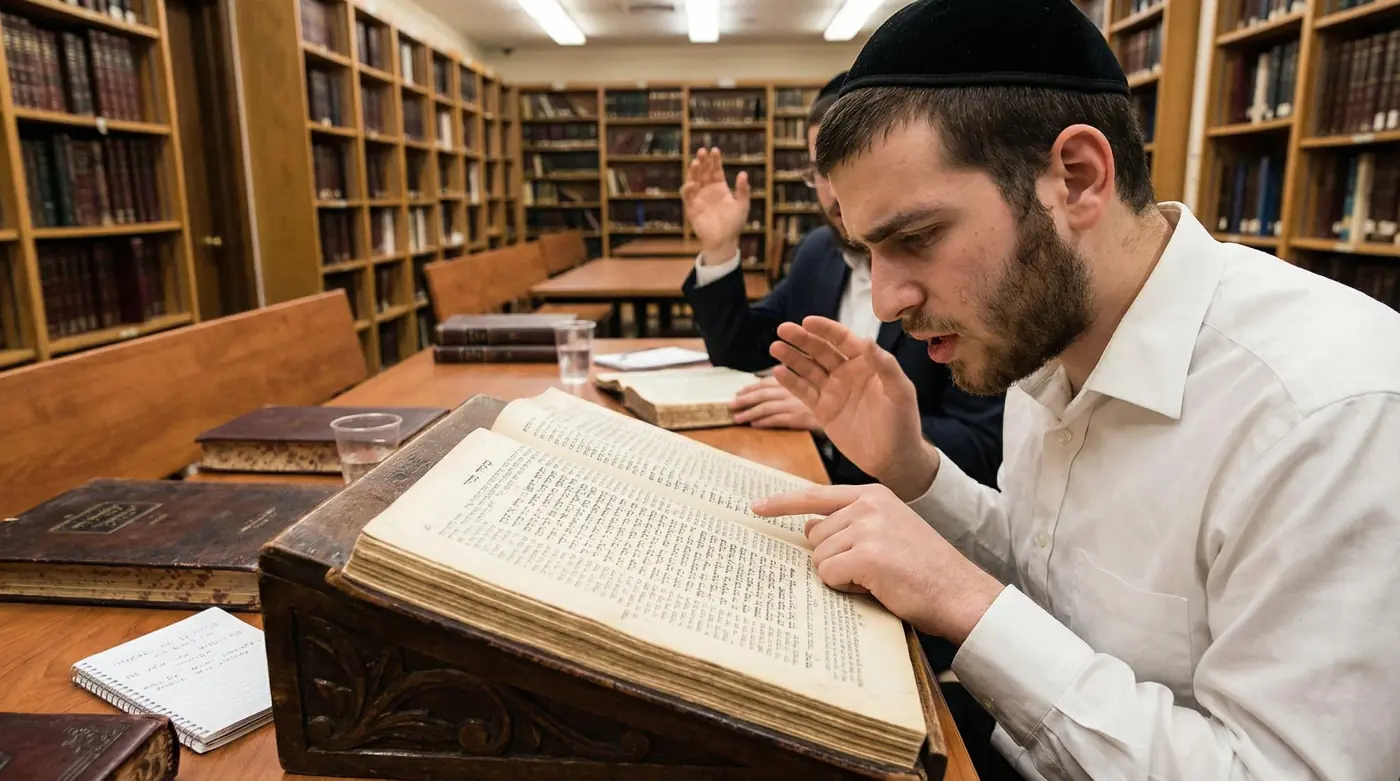
Dialectical reasoning in Torah learning refers to a method of argumentation and analysis that involves the examination of opposing viewpoints or contradictions in order to arrive at a deeper understanding or resolution. It is a fundamental approach to Jewish legal and philosophical discourse that has been used for centuries. Rather than presenting a single authoritative ruling and moving on, the Gemara deliberately raises contradictions, entertains alternative readings, and tests every position against its strongest objection. The goal is not merely to arrive at a final answer. The goal is to understand the full scope of a question so deeply that even the rejected opinion illuminates something true about the Torah’s wisdom.
This approach stands at the heart of what it means to be a Ben Torah (Torah scholar). We do not learn passively. We engage, question, probe, and wrestle with the text. The Gemara in Maseches Megillah 6b teaches, “אם יאמר לך אדם יגעתי ולא מצאתי אל תאמן”, “If a person says to you, ‘I toiled but did not find,’ do not believe him” (Megillah 6b). Torah yields its treasures to those who labor in it. And dialectical reasoning, the discipline of examining an idea from every side, is one of the primary forms of that labor.
Within this framework, terms like kushya (difficulty), teirutz (resolution), and stirah (contradiction) are not obstacles. They are the building blocks of clarity. Every question the Gemara raises is an invitation to think more carefully, and every counterargument is a tool for refining the truth.
The Gemara’s Method: Building Understanding Through Shakla V’Tarya
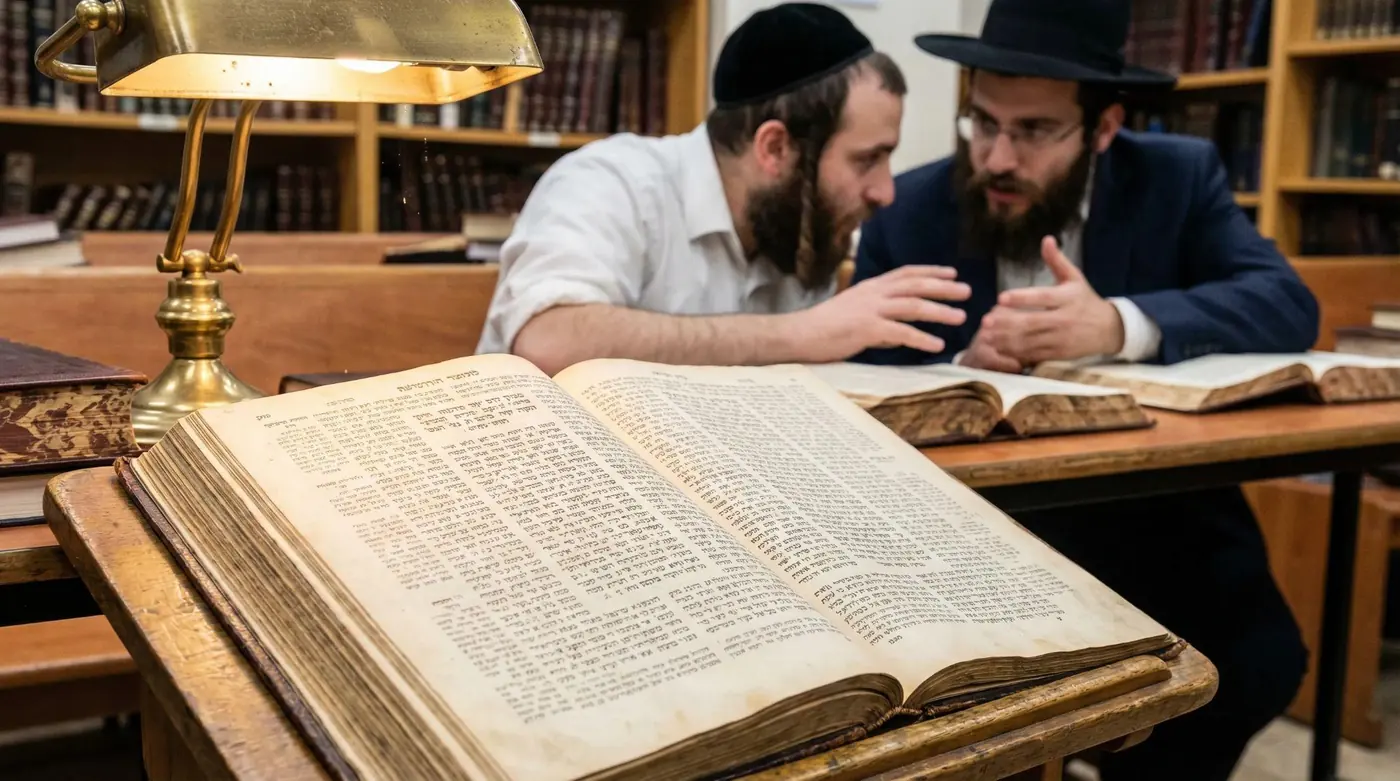
The Gemara’s distinctive method of dialectical reasoning is known as shakla v’tarya, which literally means “give and take.” This is the back-and-forth rhythm of Talmudic debate, a structured process of questioning, challenging, defending, and resolving that unfolds across virtually every sugya (topic) in the Bavli and Yerushalmi.
A typical shakla v’tarya begins with a statement, perhaps a Mishnah or a teaching from a Tanna. The Gemara then asks: “Mai ta’ama?”, “What is the reason?” Or it raises a contradiction from another source: “U’reminhu”, “And we raise an objection.” The dialogue proceeds as one position is tested against another, with each challenge demanding a defense or a refinement. Sometimes the Gemara harmonizes the sources: sometimes it identifies a machlokas (dispute) between Tannaim or Amoraim. But the process itself, the rigorous, relentless questioning, is where the deepest learning happens.
Consider, for example, the extensive debates in Maseches Eruvin where the positions of Rabbi Meir and Rabbi Yehudah are tested against one another about what constitutes a valid reshus (domain) on Shabbos. These debates shape the practical halacha governing our Shabbos observance to this day. To see how Rabbi Meir’s legal positions were transmitted, even when not always accepted as final halacha, see our article on Rabbi Meir Rejected Rulings.
The Stam HaGemara, the anonymous editorial voice of the Talmud, plays a crucial role in this process. It is the Stam that structures the shakla v’tarya, weaving together statements from different generations and pressing each position to its logical limits. Through this layered dialogue, the Gemara does not simply record opinions. It teaches us how to think.
Rabbi Meir and the Mastery of Svara and Counter-Svara
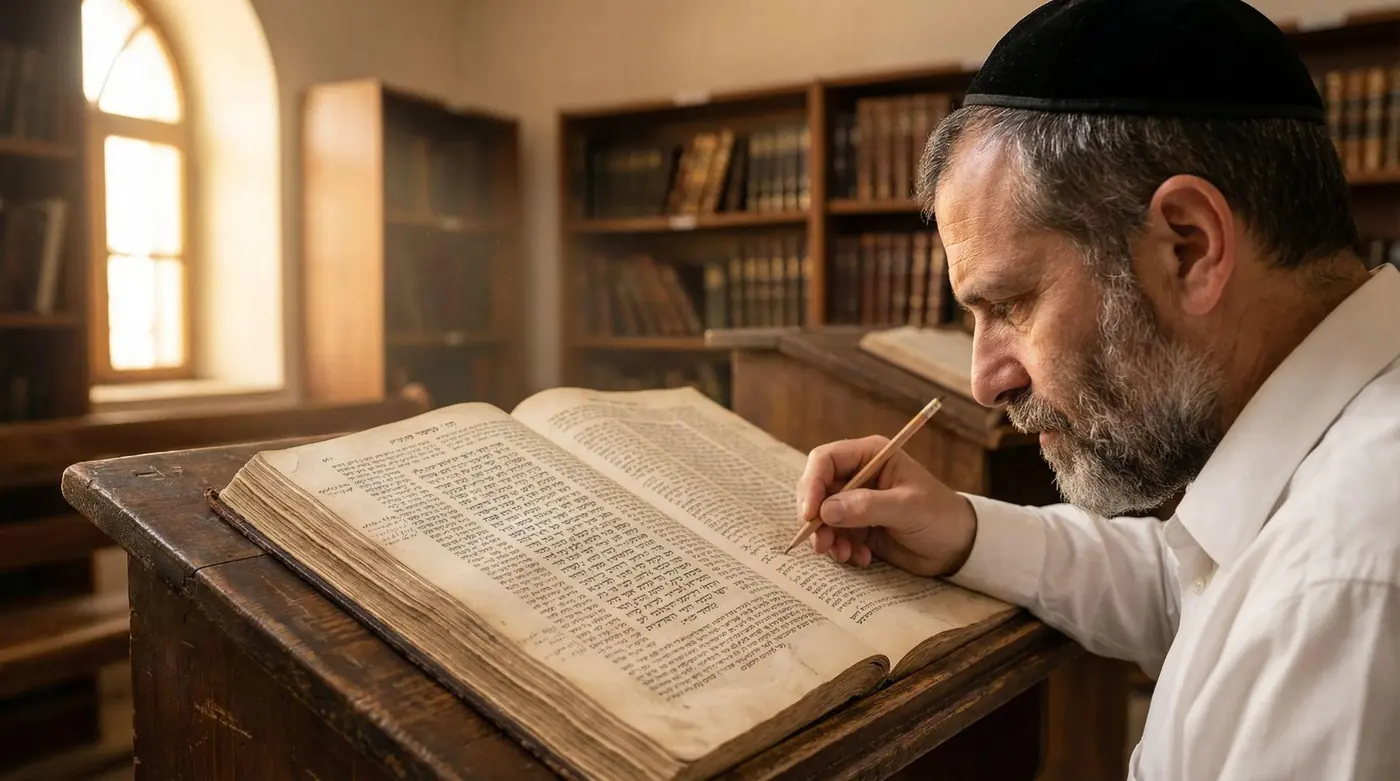
Among all the Tannaim, Rabbi Meir Baal Haness stands out for his extraordinary mastery of dialectical reasoning. The Gemara in Eruvin 13b offers one of the most remarkable descriptions of any Torah scholar in all of Talmudic literature: “שלא יכלו חבריו לעמוד על סוף דעתו”, “His colleagues could not fully grasp the depth of his reasoning” (Eruvin 13b). This was not merely a compliment about intelligence. It was a description of a mind so deeply immersed in the dialectical method that Rabbi Meir could argue a point from every conceivable angle, declaring the tamei (impure) to be tahor (pure) and providing compelling proof, then reversing course and proving the opposite with equal rigor.
This capacity for svara (logical reasoning) and counter-svara was not intellectual gamesmanship. It was a form of avodas Hashem (service of Hashem). By exhaustively testing every position, Rabbi Meir ensured that no facet of the Torah’s truth remained unexamined. His method of Dialectical Reasoning, advancing an argument and then dismantling it himself, is the very engine of Talmudic analysis.
We see this capacity at work throughout the Gemara. In Maseches Niddah 19a, the Gemara lays down the principle ‘ein adam dan gezerah shavah me’atzmo’—a person may not derive a gezerah shavah on his own authority—illustrating the limits of individual logical creativity in halachic derivation. In Maseches Menachos, Rabbi Meir engages in debates regarding the structure of meal offerings, applying hermeneutical principles to derive patterns in how menachos are prepared. Each debate reveals a mind that grasped not one line of reasoning but every possible line simultaneously.
Eruvin 13b: When Opposing Views Both Contain Divrei Elokim Chaim
The Gemara in Eruvin 13b records that for three years, Beis Hillel and Beis Shammai debated, each side insisting the halacha followed their position. A Bas Kol (Heavenly Voice) then declared: “אלו ואלו דברי אלוקים חיים”, “These and these are the words of the living G-d” (Eruvin 13b). Both views contain genuine Torah truth. The halacha was established according to Beis Hillel, but the opinion of Beis Shammai was not dismissed as error. It remains part of Torah.
This principle is central to understanding why Rabbi Meir’s method matters. When the Gemara records that Rabbi Meir could argue both sides of a question with equal force, it is teaching us something profound about the nature of Torah itself. Hashem’s wisdom is not a single, narrow path. It is vast enough to contain multiple truths, each illuminating a different dimension of the same reality. The Maharsha explains that the purpose of recording rejected opinions alongside accepted ones is precisely so that future generations can learn from the full depth of the dialectical process, not only the conclusion but the reasoning that led to it.
For a deeper understanding of why the Gemara records Rabbi Meir’s teachings under the phrase “Acherim omrim”, “Others say”, see our article on Acherim Omrim.
Machlokas L’Shem Shamayim: Why Disagreement Strengthens Torah
The Mishnah in Pirkei Avos 5:17 teaches: “כל מחלוקת שהיא לשם שמים סופה להתקיים”, “Every dispute that is for the sake of Heaven will endure” (Avos 5:17). The classic example given is the machlokas between Hillel and Shammai. Their disagreements were not personal. They were driven by a shared commitment to uncovering the full truth of Hashem’s Torah.
Dialectical reasoning is the practical expression of this principle. When two Tannaim disagree, when Rabbi Meir challenges Rabbi Yehudah, or when the Chachamim push back against Rabbi Meir’s position, the Torah is not weakened. It is strengthened. Each objection forces the other side to clarify, refine, and deepen its reasoning. A position that survives rigorous challenge is stronger for having been tested.
Commentators, drawing on Mishnah Eduyot 1:5 and explanations such as the Maharsha on Eruvin 13b, explain that a machlokas l’shem Shamayim endures because both sides eventually contribute to the clarification of halacha. The rejected opinion is not wasted—it serves as a boundary marker, defining the limits of the accepted ruling and preserving alternative reasoning for future generations who may face different circumstances. This is why the Mishnah records minority opinions alongside majority rulings, and why Rabbi Meir’s teachings permeate every masechta of the Talmud even though the fact that the halacha does not always follow him.
The Gemara in Eruvin 13b explains that Beis Hillel merited having the halacha follow them because they were נוחין ועלובין (gentle and forbearing), studied the opinions of Beis Shammai alongside their own, and even cited Beis Shammai’s position first. Tosafos further develops this theme. This humility, this willingness to engage honestly with an opposing view, is the foundation of authentic Torah dialectics. To explore how Rabbi Meir’s reasoning was considered too deep even for his contemporaries, see Rabbi Meir Reasoning Too Deep.
Dialectical Reasoning as a Path in Avodas Hashem
Dialectical reasoning is not limited to the beis midrash (study hall). The discipline of examining multiple perspectives, questioning assumptions, and seeking truth through honest tension is also a path in our personal avodas Hashem. When we learn to hold complexity, to sit with a question before rushing to an answer, we develop the middah (character trait) of savlanus (patience) and the intellectual humility that Chazal valued so highly.
The Ramchal (Rabbi Moshe Chaim Luzzatto) in his Derech Tevunos (The Way of Understanding) systematized the logical methods that underlie Talmudic reasoning, providing tools for categorizing and analyzing Torah arguments. He understood that the dialectical method is not merely an academic technique. It is a way of training the mind to perceive truth more clearly, and a trained mind serves Hashem more faithfully.
The Gemara in Chagigah 15b records that Rabbi Meir was able to learn Torah even from his teacher Acher (Elisha ben Avuyah), extracting the inner fruit and discarding the outer peel. This capacity, the ability to evaluate, discern, and separate truth from falsehood, is the direct product of dialectical training. A mind shaped by shakla v’tarya does not accept ideas uncritically. It tests them, weighs them, and retains only what withstands scrutiny.
Applying the Talmudic Model to Our Own Learning and Middos
How do we bring the Gemara’s dialectical method into our own lives? The first step is in how we approach limud Torah itself. When we sit down to learn Gemara, we should not merely read the words. We should ask questions. Why does the Gemara raise this objection? What assumption is being challenged? What would the halacha look like if the opposing view were accepted? This kind of active, questioning engagement is precisely what Rabbi Meir modeled.
But the application extends beyond the study table. Dialectical reasoning teaches us to examine our own middos with the same rigor we bring to a difficult Tosafos. Are we certain our motivations are l’shem Shamayim? Have we considered the other person’s perspective before reaching a conclusion? The discipline of shakla v’tarya, of honestly weighing both sides, cultivates fairness, humility, and a deeper commitment to emes in all areas of life.
When we give tzedakah (charitable giving) in the zechus (merit) of Rabbi Meir Baal Haness, we participate in this legacy. We support the institutions of Torah learning in Eretz Yisroel where this very method, the back-and-forth of chavrusa study, the probing questions of the shiur, continues to produce talmidei chachamim who carry forward the mesorah (tradition) that Rabbi Meir helped shape. By giving through Rabbi Meir Baal Haness Charities, we ensure that the shakla v’tarya of the beis midrash does not fall silent.
May the discipline of honest inquiry, the courage to question, and the humility to listen, the hallmarks of Rabbi Meir’s dialectical mastery, guide each of us in our own Torah learning and in every area of our avodas Hashem.
Conclusion
The dialectical reasoning that animates every page of the Gemara is a sacred inheritance. When we engage in shakla v’tarya, when we raise a kushya and labor toward a teirutz, we join a conversation that stretches back through the Amoraim and Tannaim all the way back to Sinai itself. Rabbi Meir Baal Haness, whose brilliance in svara and counter-svara left even his greatest contemporaries in awe, stands as the supreme example of what this method can produce: a mind wholly devoted to uncovering every facet of Hashem’s Torah.
To support the continuation of this sacred tradition, the Torah scholars, the families, the widows and orphans in Eretz Yisroel who depend on our generosity, consider giving tzedakah through Rabbi Meir Baal Haness Charities. Founded in 1799, Rabbi Meir Baal Haness Charities channels our collective chesed (kindness) directly to those in the Holy Land who need it most.
In the merit of Rabbi Meir Baal Haness, may you be blessed with clarity in your learning, wisdom in your decisions, and the humility to seek truth in every machlokas l’shem Shamayim you encounter. May the zechus of your tzedakah bring yeshuos (salvations) and brachos (blessings) to you and to all of Klal Yisroel.