

Home » Rabbi Meir Baal Haness: Biography, Teachings & Legacy
Rabbi Meir Baal Haness: Biography, Teachings & Legacy
Rabbi Meir Baal Haness — the miracle worker, the master of Mishnah, the light of the Jewish people. Explore the life, Torah wisdom, historical context, and enduring spiritual legacy of one of the greatest Tannaim, whose merit continues to bring yeshuos to Klal Yisroel to this day.
Explore Rabbi Meir Baal Haness

Torah Teachings & Wisdom
The fox fables, “Acherim Omrim,” and the halachic methodology that shaped the Mishnah and Jewish thought.
Teachers & Students
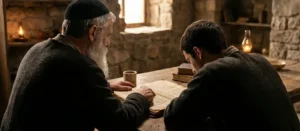
Rabbi Akiva, Elisha ben Avuyah, and the talmidim who shaped Rabbi Meir and the Mishnah.
Segulos & Miracles
The fox fables, “Acherim Omrim,” and the halachic methodology that shaped the Mishnah and Jewish thought.
Rabbi Meir Biography
Rabbi Akiva, Elisha ben Avuyah, and the talmidim who shaped Rabbi Meir and the Mishnah.
Rabbi Meir: Roman Era Historical Context
Why “Baal Haness”?
The Gemara (Avodah Zarah 18b) recounts the rescue of Rabbi Meir’s sister-in-law from Roman captivity. Rabbi Meir instructed a guard to say “Eloka D’Meir Aneini” — “G-d of Meir, answer me!” — and the guard was miraculously saved from execution. On the basis of this story, later generations came to refer to him as Rabbi Meir Baal Haness and to invoke his merit in times of distress.
Understanding Rabbi Meir Baal Haness
The Man Behind the Mishnah
Chazal teach (Eruvin 13b) that although Rabbi Meir’s brilliance was unmatched in his generation, the halacha was not generally established according to his view because his colleagues could not always follow the full depth of his reasoning. Yet his influence on the Mishnah is unparalleled — the Gemara (Sanhedrin 86a) states that the “stam Mishnah” — the anonymous rulings throughout the Mishnah — follow Rabbi Meir’s opinion.
A Light in Dark Times
The name “Meir” means “one who illuminates.” The Gemara (Eruvin 13b) says his given name was actually Nehorai, and he was called Meir because he would enlighten the eyes of the Sages in halacha. In an era of Roman oppression and the martyrdom of his teachers, Rabbi Meir’s Torah was quite literally the light that kept the mesorah alive.
Beruriah — His Partner in Torah
Rabbi Meir’s wife Beruriah is one of the few women quoted in the Gemara for her halachic opinions. The Midrash (Midrash Mishlei 31:10) recounts that when their two sons died on Shabbos, she waited until after havdalah to tell Rabbi Meir, presenting their deaths as a mashal: “A man left a deposit with us — the Owner has come to take it back.” Her wisdom and faith made her one of the most remarkable figures in all of Chazal.
Tzedakah in His Merit
For over two centuries, Rabbi Meir Baal Haness Charities has carried forward the tradition of giving tzedakah in Rabbi Meir’s merit — supporting Torah scholars, widows, orphans, and needy families in Eretz Yisroel. Giving in his name creates a zechus for yeshuos in parnassah, shidduchim, refuah, and every area where a person needs Hashem’s help.
Donate in the Merit of Rabbi Meir →Frequently Asked Questions About Rabbi Meir Baal Haness
Rabbi Meir was one of the greatest Tannaim — the sages of the Mishnah — who lived in Eretz Yisroel in the second century CE. A primary student of Rabbi Akiva, he is considered the author of the “stam Mishnah” (the anonymous rulings that form the backbone of the Oral Torah). The Gemara (Avodah Zarah 18b) recounts a miraculous rescue involving the phrase “Eloka D’Meir Aneini,” and on the basis of this story, later generations came to call him “Baal Haness” — master of miracles.
It means “G-d of Meir, answer me!” This is the phrase Rabbi Meir used when calling upon Hashem for a miracle, and it is the phrase Jews have used ever since when invoking his merit in times of need. It is traditionally recited when giving tzedakah to Rabbi Meir Baal Haness Charities, particularly when seeking a yeshuah for a lost object, parnassah, shidduch, or refuah.
The tradition combines two powerful concepts: the general Torah teaching that tzedakah is a source of merit and Divine protection, and the specific segulah of invoking the zechus of a great tzaddik. Chazal describe miraculous salvation that occurred when Rabbi Meir called upon Hashem, and many Jews have since trusted in this segulah for yeshuos — while knowing that all salvation comes only from Hashem. Gedolei Yisroel throughout the centuries have endorsed this practice, and Rabbi Meir Baal Haness Charities, founded in the late 18th century, is one of the oldest Jewish charitable organizations in the world.
Rabbi Meir is buried in Teveriah (Tiberias) in Eretz Yisroel, overlooking the Kinneret. His kever has been a place of pilgrimage and tefillah for centuries. Torah scholars from Rabbi Meir Baal Haness Charities daven to Hashem at his holy kever in his merit on behalf of donors, continuing the ancient tradition of praying at the graves of tzaddikim.
The practice of saying “Eloka D’Meir Aneini” when searching for a lost object is one of the most widely practiced segulos in the Jewish world. It originates from the Gemara’s account (Avodah Zarah 18b) of miraculous salvation through invoking Rabbi Meir’s merit. Giving tzedakah to the poor of Eretz Yisroel while reciting this phrase has been passed down as a cherished segulah for finding lost items and for yeshuos in general — while recognizing that all outcomes are from Hashem alone.
Continue the tradition
Give tzedakah in the merit of Rabbi Meir Baal Haness — as Jews have done for over 200 years.
Your donation supports needy families, Torah scholars, widows, orphans, and the ill and infirm in Eretz Yisroel. Torah scholars will daven at Rebbe Meir’s holy kever on your behalf.